Journal / 01
Why your room goes back to midday at 9pm
The sun sets, and then you switch the lights on and undo it. Here is what actually happens to the light in your room after dark.
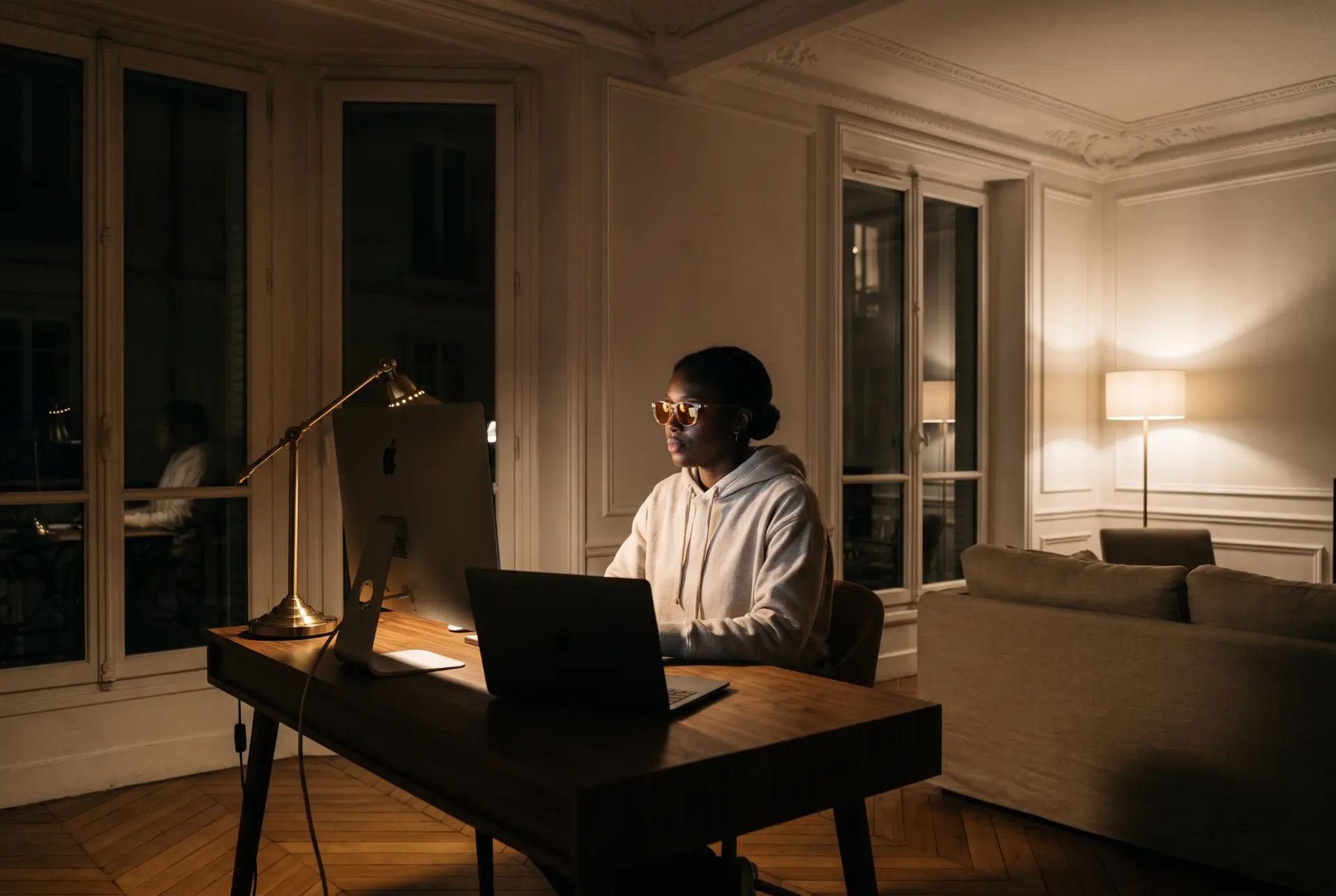
Daylight has a shape, and it changes all day
Morning light is cool and blue-heavy. By late afternoon the sun drops, the sky warms, and the blue end of the spectrum falls away on its own. That slide from cool to warm is the oldest signal there is about what time it is.
Then the sun finishes setting, you reach for a switch, and the room fills back up with light tuned for the middle of the day.
Your evening light is daytime light
Ceiling LEDs, desk lamps, phone displays and monitors are all built to look crisp and neutral, which in practice means blue-heavy. A bright screen at 22:00 is closer to noon than to dusk.
So the day is over outside and still going indoors. The timeline below is what most evenings look like.
- 08:00
Daylight
Bright, cool light. Exactly what you want.
- 17:30
Sun drops
The sky warms and dims on its own.
- 19:30
Lamps and screens take over
Your room goes back to midday light.
- 20:00
Glasses on
Evening light, restored.
- 23:00
Lights out
Take them off and sleep.
What that costs you
Nothing dramatic. It is a small mismatch, repeated every night: the room says work, the hour says stop. Most people notice it as an evening that feels flatter and later than it is.
Removing it does not require dimming your life. It requires removing one part of the spectrum.
The narrow fix
The amber lens takes out the cool, short-wavelength part of whatever light your room is throwing, and leaves the rest. Lamps still light. Screens still work. Faces still look like faces, a little warmer.
Cool blue light — the kind screens, ceiling LEDs and phone displays push out after dark. Almost none of it reaches your eyes.
Warm light — lamps, candles, faces, wood, skin tones. It passes through, so the room still looks like a room.
Nothing else changes
You do not have to change your screens, your habits or your bedtime. You put the glasses on when you switch the lamps on, and take them off when you go to bed.
01
Put them on after sunset
Around the time you switch the lamps on.
02
Change nothing else
Keep your screens, lamps and habits as they are.
03
Take them off for bed
They belong on the nightstand, not on your face.
The room does not get darker. It gets warmer.
What this means for you
- Daylight loses its blue naturally at dusk. Indoor light does not.
- The lens puts that missing slide back, without dimming the room.
- One habit: on when the lamps go on, off at bedtime.
This is the first entry.