Journal / 05
Why cheap blue-light glasses feel like nothing
If you have already tried a $15 pair and felt no difference, you were probably right. Here is what was missing.
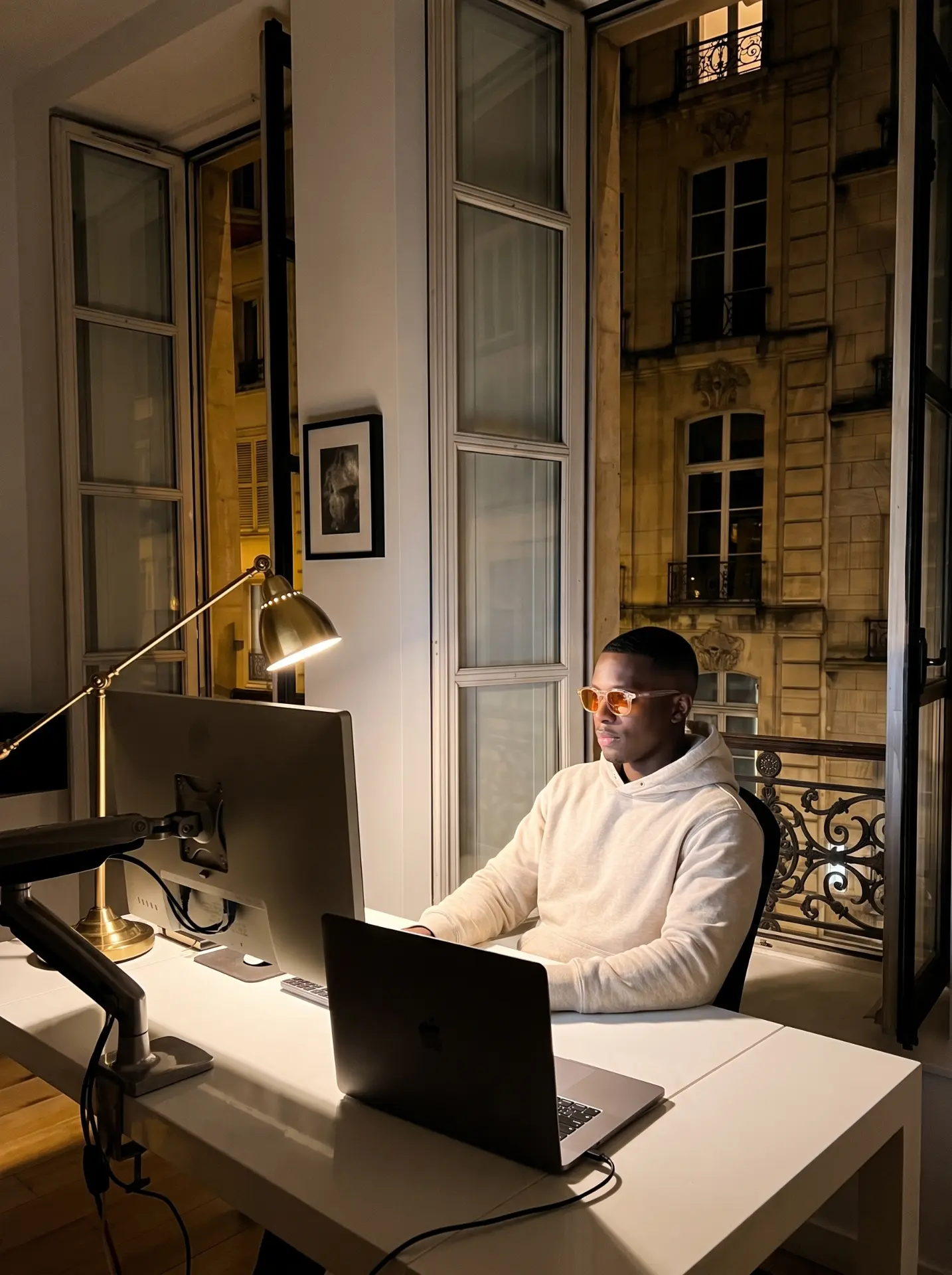
The usual experience
You buy a cheap pair, wear it for a week, notice nothing, and conclude the whole category is marketing. That is a reasonable conclusion from that evidence.
It is also a conclusion about one lens, not about filtering light.
What a cheap lens actually does
Most inexpensive pairs use a clear lens with a light coating, filtering a small percentage of blue light across a wide range. Nothing about the room visibly changes, because almost nothing about the light has changed.
There is usually no published transmission curve, no stated cut-off, and no figure for what passes below 450 nm — because those numbers would not sell the product.
Typical blue-light glasses
AFTEN One
Blue light actually blocked
A few percent. Mostly marketing.
Nearly all of it below 450 nm.
Lens colour
Clear — looks the same, does little after dark.
Amber — you can see it working.
Made for
All-day, general use.
The hours after sunset.
Transmission data published
Rarely, if ever.
Yes. The full curve is on this page.
Frame
Injection-moulded plastic.
Hand-polished clear acetate.
Case
Soft pouch, or none.
Rigid box that is the case.
Returns
Varies, often none.
30 days.
Price
$10–$30 for glasses that filter little.
$79, or two pairs for $129.
What a working lens does instead
It picks a line — here, about 480 nanometres — and holds it: under 1% passing below 450 nm, roughly 62% of visible light still through. Steep, specific, measurable.
And it looks like it. The colour of the room shifts the moment you put it on.
- < 1 %
passes below 450 nm
The deepest blue — the part screens and LEDs push hardest.
- ≈ 480 nm
cut-off
Where the lens stops blocking and starts letting light through.
- ~ 62 %
visible light
The room stays bright enough to read, cook and work in.
The honest trade
An amber lens is not invisible. Colours shift warm, and you will notice it in photographs and video calls. That is the cost of the filter working.
If you want a lens nobody notices, buy the clear one and expect what it gives. If you want the light in the room to change, it has to look changed.
Why this one costs more
A tuned lens with measured transmission, polished clear acetate, a proper hinge, a rigid box, and returns open for 30 days. $79 for one pair, $129 for two.
The comparison that matters is not $79 against $15. It is $79 against a $15 pair you stopped wearing.
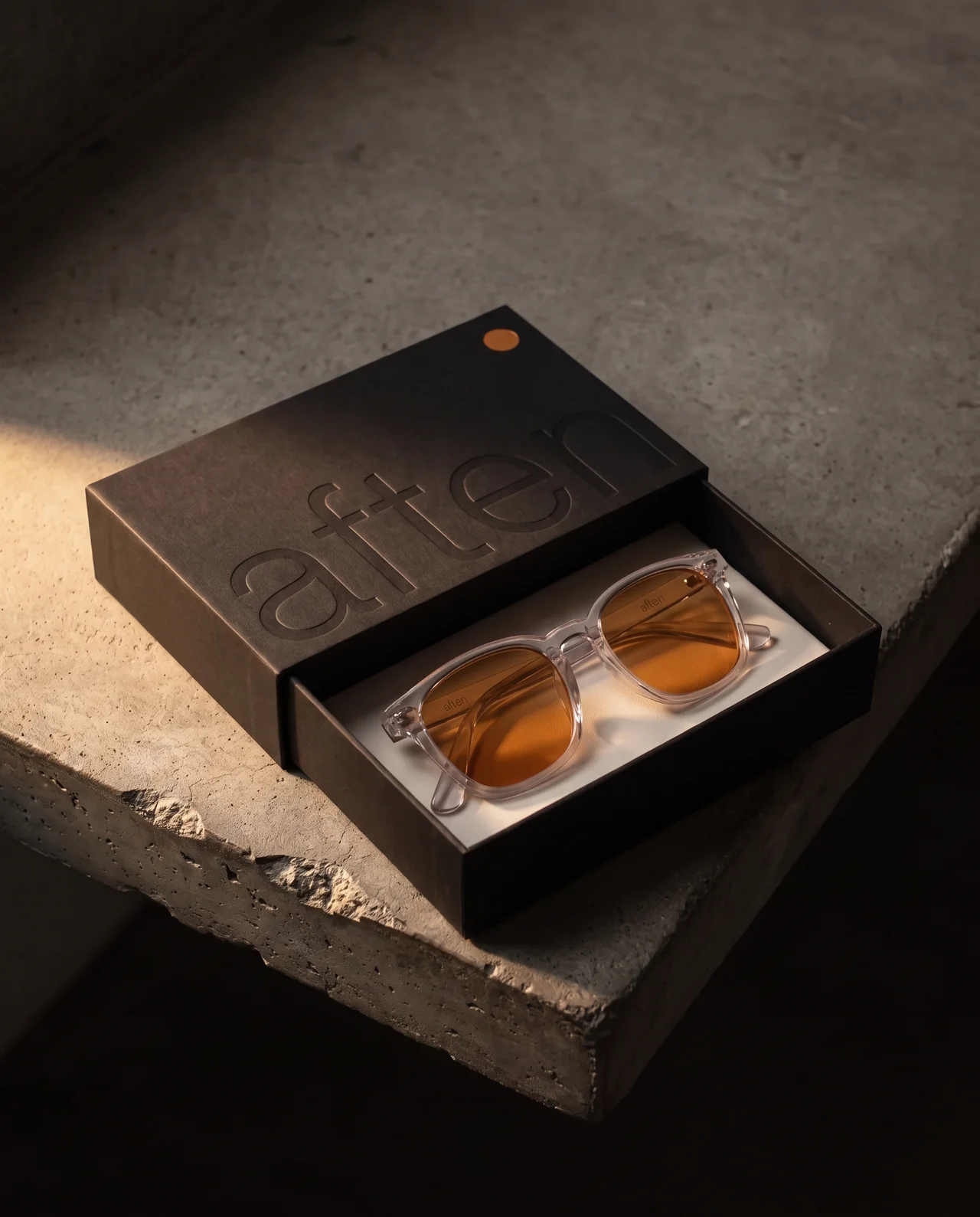
You did not fail at the habit. The lens failed at the job.
What this means for you
- Cheap pairs usually filter a few percent and publish nothing.
- A working lens states its cut-off and shows the curve.
- The warm colour shift is the trade you make for the filter.